‘Why are Arabs not allowed to dream?’
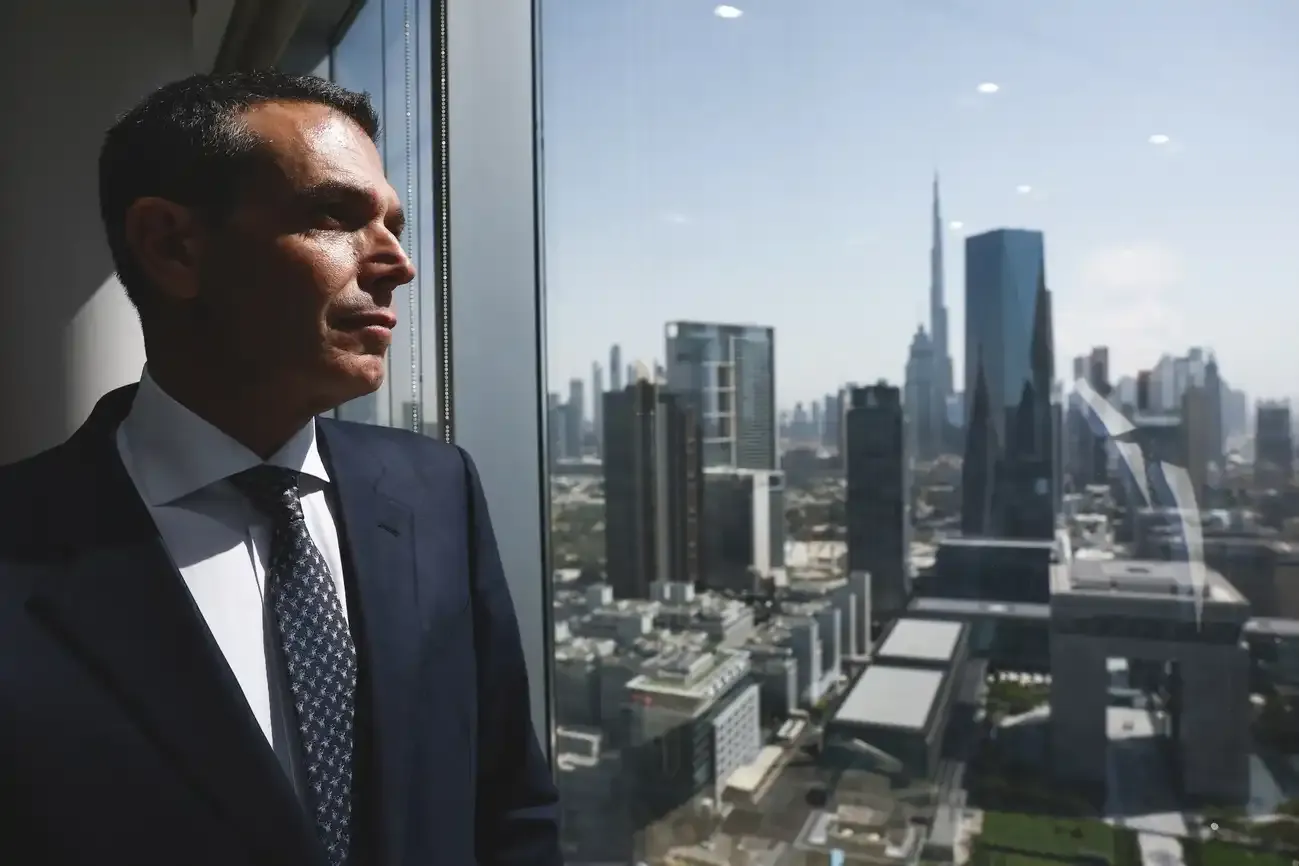
Ziad El Chaar, CEO of Dar Global, in Dubai. Saudi Arabia today is 'like Dubai, Qatar, Abu Dhabi, Bahrain in 2003', he says
- Interview with Dar Global’s Ziad El Chaar
- Giga-project coverage ‘not really fair’
- Saudi success stories are ignored
Saudi Arabia’s giga-projects are too grandiose, too hasty and destined for a brutal reality check – that is many outsiders’ view of the kingdom’s multi-trillion-dollar ambitions. Inside the country, as the world’s financiers descend on Riyadh for the Future Investment Initiative summit, irritation at these criticisms is hardening.
“It’s not really fair to get this coverage,” Ziad El Chaar, chief executive of Dar Global, tells AGBI. “Why are Arabs not allowed to dream?”.
“Look back at the countries in the Gulf when they started and how many projects they announced. Some projects were delivered, some of them on time, some of them late. Some were cancelled, some were redesigned – but this is always the case of progress.”
Scepticism about the Vision 2030 projects is increasing, particularly among overseas investors, but many of them are progressing well, El Chaar points out.
He ticks off a list with exasperation: Roshn, Qiddiya, King Salman Park, King Salman International Airport – expected to be among the world’s largest – and the $22 billion Riyadh Metro, Saudi Arabia’s first underground railway, which opened to the public last December after years of uncertainty.
Yet international headlines are dominated by Neom and the questions over its cost and viability.
The Line – originally conceived as a 170km-long futuristic city within Neom – has attracted the most attention and criticism. Doubts have also been raised about the feasibility of Trojena, the Neom alpine resort due to host the 2029 Asian Winter Games.
But cranes continue to move at Oxagon, Neom’s vast industrial hub, where Belgium’s Deme Group will start dredging work this year.
For wary investors, the distinction between ambition and execution across the giga-projects remains critical.
To El Chaar, that scrutiny feels short-sighted.
“People look at 20 projects [and] they select one or two projects that are not progressing at the same pace, and they only focus on the two,” he says.
“They forget about the other 18.”
Dar Global, the international arm of Saudi Arabia’s Dar Al Arkan, has more than $12.5 billion of projects under development – among them a $1 billion “Trump Plaza” in Jeddah and plans for a Trump Tower in Riyadh.
The CEO bristles at the notion that Saudi Arabia should be held to a higher bar than other economies planning large-scale transformations.
“Can you name any country in the G20 that in the last seven years announced such a number of projects, started working on many of them, opened five lines of metro at the same time in one of the biggest cities in the world, is launching a new airline and has completely reformed their real estate laws, investment laws, visa laws?” he asks.
“None.”
Saudi Arabia is the only Arab member of the Group of 20 economies, which includes the US, China and the EU. The International Monetary Fund is forecasting 4 percent growth for Saudi Arabia this year and in 2026.
But oil prices at below $70 a barrel and Opec+ production cuts have widened its deficit. The IMF puts Saudi’s fiscal breakeven at just over $90.
AGBI reported in March that the strain has filtered through to the $925 billion Public Investment Fund, central to Vision 2030. It has ordered spending cuts of up to 60 percent across more than 100 companies, though no projects have been scrapped. Funding for Expo 2030, the 2029 Asian Winter Games and the 2034 World Cup remains intact.
“The crown prince’s message was clear – we must avoid any pride over projects we undertake,” Mohammed Al Jadaan, Saudi Arabia’s finance minister, told business leaders in Washington earlier this month.
“If a project no longer makes sense, we will not hesitate to change it, suspend it or extend it.”
Contracts awarded under the giga-projects rose 20 percent this year to $196 billion, consultancy Knight Frank said in its 2025 Giga Projects report.
El Chaar – a veteran of Dubai’s property market and formerly managing director at Damac Properties – believes Saudi Arabia’s turn in the spotlight mirrors earlier Gulf development cycles.
“The Saudi market, in 2026, is like Dubai, Qatar, Abu Dhabi, Bahrain in 2003,” he says.
“You’re going after the biggest market in the Arab world. To build one tower in New York, you need 20 years. People are telling us a project announced five years [ago] is late?
“Go and sit in a coffee shop in Riyadh and all people are talking about is development. Go and sit in a coffee shop in London and everybody is worried about new taxes.”